


There is a moment every morning that nobody talks about in interior design. The alarm goes off. The eyes open. And before any of the considered decisions, the furniture, the lighting, the art, come into play, your feet hit the floor.
What they land on matters more than most people give it credit for. A bedroom mat, or bedroom floor mat, is not a finishing touch. It is, in a very practical sense, where the room begins. And yet it tends to be chosen last, budgeted least, and replaced most often. That is a mistake worth correcting.
More Than a Bedroom Mat: What It Actually Does
1. The Sensory Argument
The first contact your feet make with the floor in the morning sets a register for the day in a way that is difficult to quantify but easy to feel. Cold hardwood or stone at 6am is a minor but daily unpleasantness. A well-chosen mat for the bedroom placed beside the bed, underfoot the moment you rise, changes that transaction entirely. The room feels considered. The morning feels less abrupt.
This isn’t sentiment. Design psychologists have long understood that tactile experience shapes how we perceive a space. A bedroom is the only room in the house entered and exited in a state of genuine vulnerability – half asleep, barefoot, unhurried. The materials underfoot carry more emotional weight here than anywhere else in the home.
2. The Practical Case
Beyond the sensory, a bedroom floor mat works harder than its footprint suggests. It absorbs sound, the soft thud of footsteps, the scrape of a chair, keeping the room acoustically intimate in a way bare floors never quite manage. It insulates, holding warmth close to the floor where it matters most on cold mornings. And in a room where the eye naturally travels downward, toward the bed, toward the floor, it anchors the visual composition, giving the space a completeness that floating furniture on bare boards rarely achieves.
Bedroom Mats: The Maximalist’s Dream
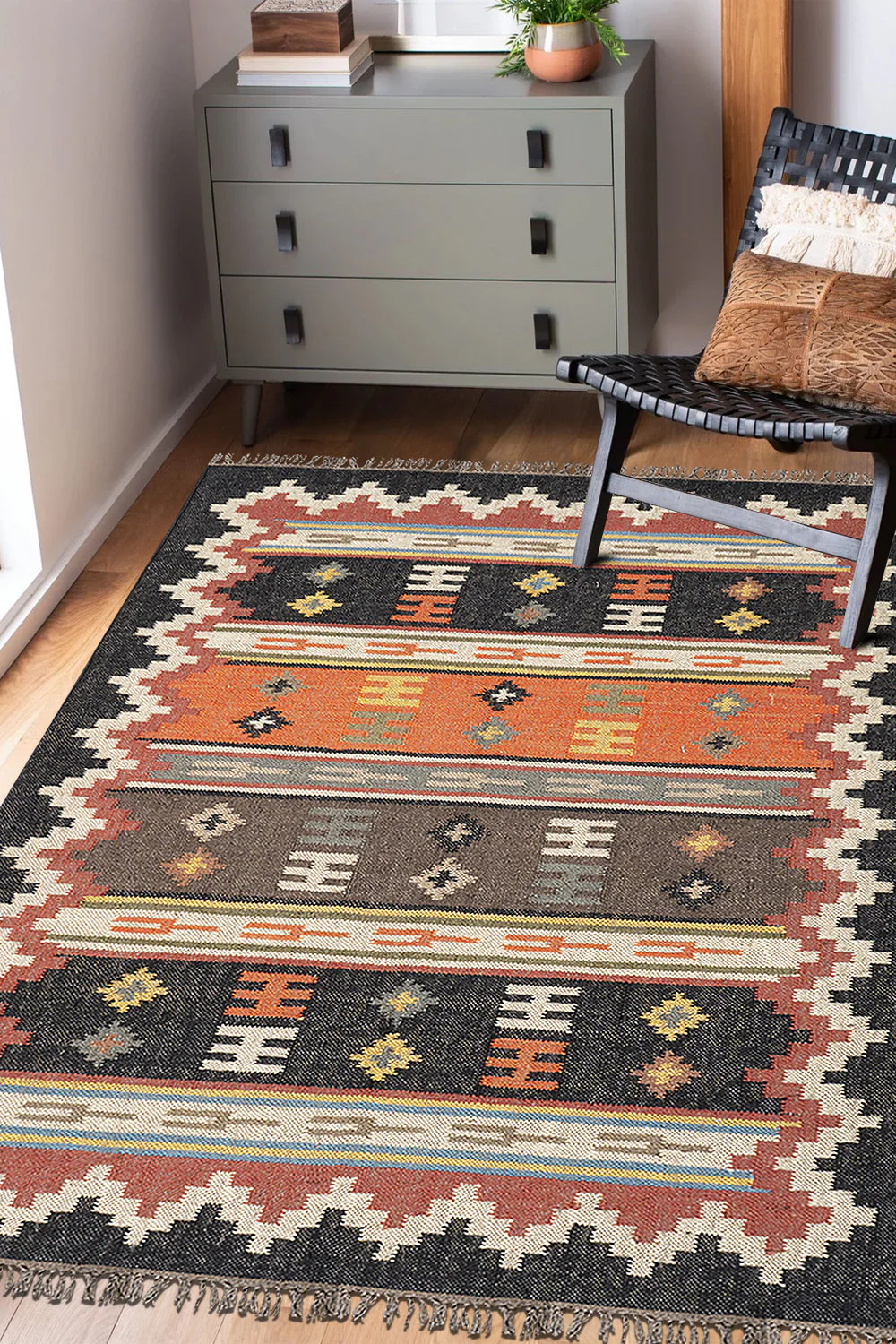
People who decorate maximally understand something about a room that minimalists sometimes don’t: the floor is not the background. In a layered bedroom, the mat is often where the whole thing starts. A boldly patterned piece, Persian-inspired or geometric or medallion-heavy, placed generously around the bed pulls everything above it into its orbit. You don’t choose the bedding and then find a mat that works. You find the mat, and the rest of the room figures itself out.
Then there’s layering. A plain jute or undyed wool base with a smaller patterned mat laid over it at the foot of the bed introduces a kind of visual architecture that single rugs don’t achieve. It looks deliberate because it is. The eye reads the layers as intention rather than accumulation. Texture against texture, pattern against plain, the bedroom floor becomes something worth looking at from across the room.
The colours maximalism reaches for right now are worth noting: deep ochre, terracotta, forest green, burgundy. These are not bold in the way that shouts. They are bold in the way that holds a room together, providing warmth and resonance that cooler, more neutral palettes simply cannot.
Bedroom Mats: The Minimalist’s Quiet Essential
Here is what many minimalist interiors get wrong about the bedroom mat: they skip it entirely, or choose something so insignificant it barely registers. The result is a room that looks correct in photographs and feels slightly empty in person.
The minimalist case for a bedroom mat is actually stronger than it first appears. There’s a version of minimalism that looks beautiful and feels slightly cold, and most of the time the floor is why. One good mat, placed with some generosity around the bed, is often all it takes. Not a statement. Just a layer of material that makes the room feel like someone actually lives in it.
Wool in a neutral tone handles this better than anything else. Ivory, warm stone, undyed natural. The pile is low enough to sit quietly in a restrained room, the texture present enough to register underfoot and across the eye. It does its job without announcing it. It reads as deliberate. In a room built on clean lines and carefully edited objects, that quality of deliberateness is everything.
Placement matters too. A mat for the bedroom that extends generously beyond both sides of the bed, rather than a narrow strip that covers the minimum, gives the room a sense of ease and proportion. It suggests a space that was thought about rather than assembled. For the minimalist, that distinction is the whole point.
Choosing the Right Bedroom Floor Mat
The questions worth asking before choosing are simpler than most people make them.
- Size
A bedroom mat that is too small is the single most common mistake in bedroom floor styling. The mat should extend at least 60cm beyond each side of the bed and 90cm beyond the foot, enough to be felt underfoot when you rise from any side, and enough to ground the furniture visually. When in doubt, go larger.
- Material
Wool remains the gold standard for bedroom mats. Wool mats are soft underfoot, naturally temperature-regulating, and increasingly beautiful with age. For a more textural, organic feel, jute mats offer a different kind of warmth – earthier, more structural, better suited to layering. Avoid synthetic fibres in the bedroom; they flatten quickly, generate static, and lack the tactile quality that makes a bedroom mat worth having.
- Pattern
Let the room speak first. A maximalist bedroom can carry a bold floral or geometric mat as the room’s primary statement. A minimalist bedroom is better served by a mat that contributes texture and proportion without adding visual complexity. Neither approach is less considered than the other.
Kesari Home: Bedroom Mats Made to Be Lived With
At Kesari Home, we think about bedroom mats the way we think about every piece in our collection: as objects that should earn their place rather than merely fill it. Our range of bedroom rugs and mats span the full breadth of intention: richly patterned pieces for rooms that celebrate visual depth, and quietly textural pieces for rooms that prefer restraint. Each is made from natural fibres, designed to age well, and sized to do what a bedroom mat should – ground the space, soften the morning, and make the room feel complete from the floor up.
Explore the Kesari Home bedroom mat collection at kesarihome.com and find the piece your bedroom floor has been waiting for.