
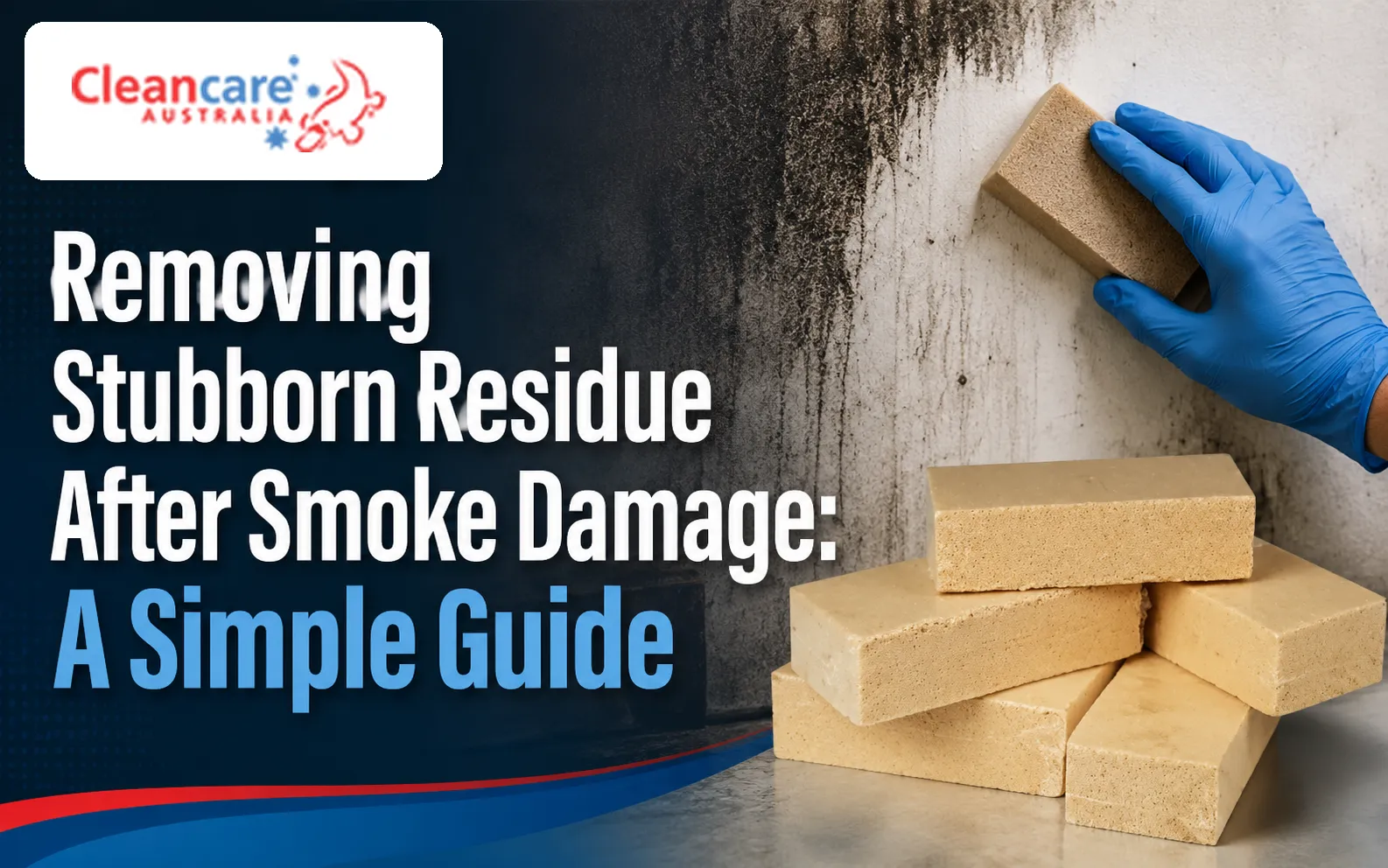
Smoke damage leaves behind far more than an unpleasant smell. After a fire — whether it’s a small kitchen mishap or something more serious — walls, ceilings, and surfaces are often coated in a stubborn film of soot and residue that ordinary cleaning simply can’t shift. Trying to wipe it away with a wet cloth usually makes things worse, smearing the greasy residue deeper into paint and plaster and turning a manageable clean-up into a permanent stain. The good news is that with the right method and the right tools, restoring your home is entirely achievable. This guide walks you through how to tackle smoke residue properly and get your space back to normal without causing further damage.
Why Smoke Residue Is So Difficult to Remove
Soot is made up of fine, oily carbon particles that cling to surfaces and work their way into porous materials. Because it’s greasy by nature, water and standard household sprays tend to spread it rather than lift it. The moment moisture hits dry soot, those particles bond to the surface and become extremely difficult to shift. A specialised soot sponge is designed specifically for this problem, using a dry cleaning method that absorbs and traps residue instead of pushing it around.
Understanding what you’re dealing with helps you choose the right approach. Smoke residue generally falls into a few categories, and each behaves slightly differently:
-
Dry residue – powdery and easier to lift, usually from fast-burning fires involving paper or wood.
-
Oily residue – sticky and stubborn, typically from smouldering plastics or synthetic materials.
-
Protein residue – nearly invisible but with a strong, lingering odour, often from kitchen fires involving grease.
-
Fuel or oil residue – dense and dark, produced by petroleum-based sources and among the hardest to remove.
Identifying the type of residue you’re facing before you begin will save you time and prevent unnecessary damage. When in doubt, always assume a dry approach first.
The Right Way to Clean Smoke Residue
The single most important rule is to start dry. Applying moisture too early sets the residue and makes permanent staining far more likely. This is where dry cleaning tools become essential. High-quality Chemical Sponges are made from vulcanised rubber that grabs soot particles on contact, lifting them cleanly off the surface without smearing. Unlike a regular household sponge, they’re engineered to hold onto residue rather than redistribute it.
Follow these steps for the best results:
-
Ventilate the area first. Open windows and let air circulate before you begin to reduce airborne particles.
-
Wear protection. Use gloves and a mask, as soot particles can irritate skin and lungs.
-
Work top to bottom. Start at the ceiling and move downward so falling debris doesn’t dirty cleaned areas.
-
Use dry strokes. Wipe in one direction, turning to a clean surface of the sponge as it fills with soot.
-
Only introduce moisture later. Once the bulk of the dry residue is gone, you can address remaining marks with appropriate cleaning solutions.
-
Take your time. Rushing leads to smearing and forces you to redo areas you’ve already cleaned.
Choosing the Right Cleaning Tool
Not all sponges are equal. A dedicated dry cleaning sponge is far more effective than a general household one. The best option for soot removal is a proper dry sponge that requires no water and can be reused by simply trimming away the dirty surface with scissors, exposing a fresh cleaning face underneath. This makes them remarkably economical for larger jobs. You can find purpose-made options like these soot and smoke sponges designed for exactly this task, and they’ll outperform any improvised alternative every time.
Tackling Different Surfaces
Different materials call for slightly different handling. Painted walls and ceilings respond well to gentle, even strokes with a dry sponge. Textured surfaces may need a lighter touch to avoid grinding soot into crevices. Fabrics, upholstery, and carpets generally require professional treatment, as household attempts often set stains permanently. For hard, non-porous surfaces like tile or glass, you can follow dry cleaning with a suitable wet clean once the loose soot is removed.
Common Mistakes to Avoid
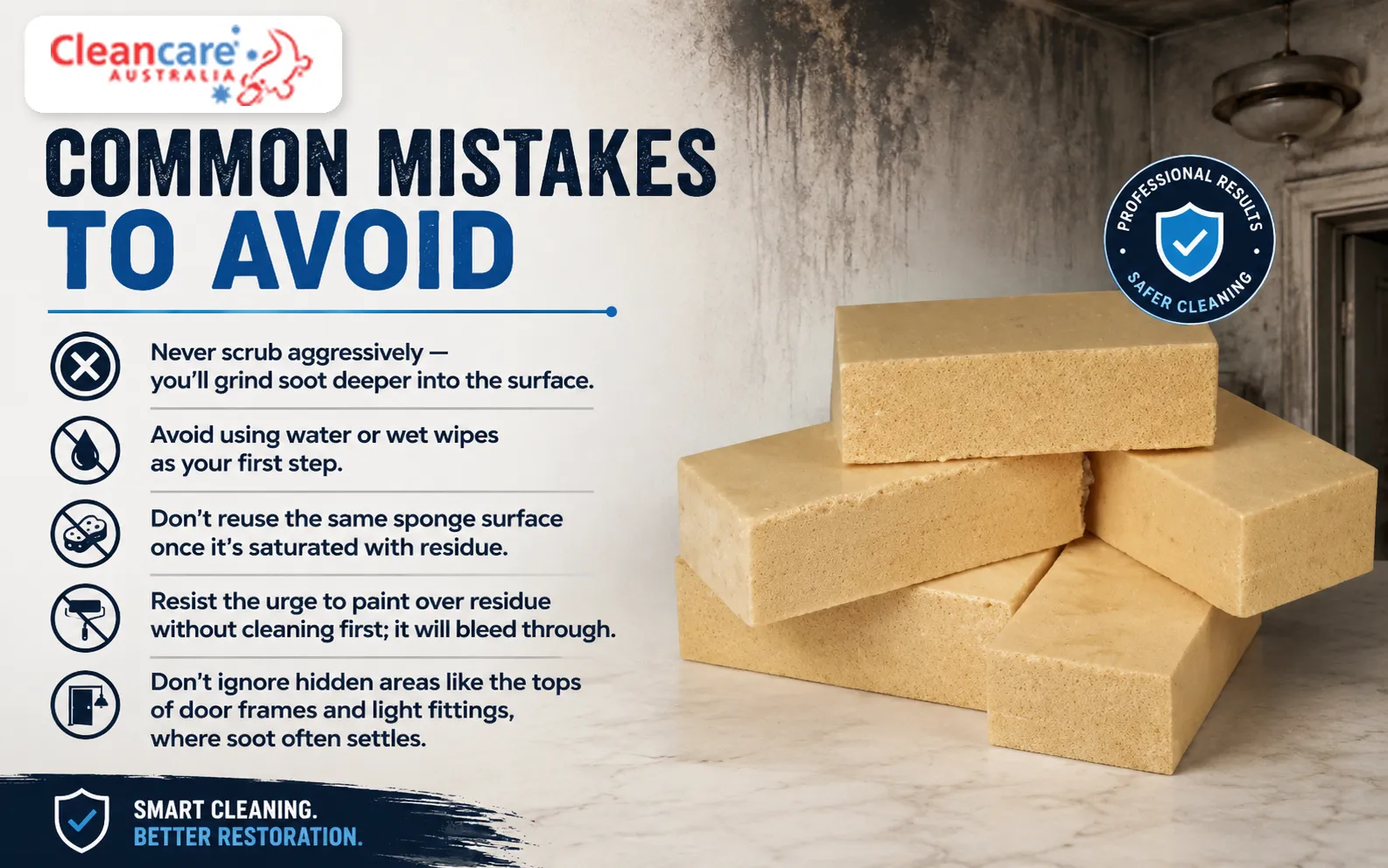
Many people accidentally make smoke damage worse by rushing the process or reaching for the wrong tools. Keep these pitfalls in mind:
-
Never scrub aggressively — you’ll grind soot deeper into the surface.
-
Avoid using water or wet wipes as your first step.
-
Don’t reuse the same sponge surface once it’s saturated with residue.
-
Resist the urge to paint over residue without cleaning first; it will bleed through.
-
Don’t ignore hidden areas like the tops of door frames and light fittings, where soot often settles.
Avoiding these simple errors is often the difference between a clean, restored wall and one that needs repainting entirely.
Why Choose Us
At CleanCare, we understand how overwhelming smoke and fire damage can be, which is why we supply professional-grade cleaning products trusted by both households and restoration specialists. Our range is carefully selected for quality, reliability, and real results, so you’re never left struggling with tools that don’t perform. We pride ourselves on fast delivery, honest advice, and products that genuinely make difficult jobs easier. When it comes to restoring your home after smoke damage, our reliable smoke sponge solutions and dedicated support make all the difference. We’re here to help you get your space back to normal with confidence, backed by a team that truly cares about your results.
Final Thoughts
Removing stubborn smoke residue doesn’t have to be a losing battle. With the right dry cleaning approach and quality tools, you can lift soot cleanly and avoid the permanent staining that catches so many people out. Start dry, work methodically from top to bottom, and use products built for the job rather than improvising with what’s on hand. Take your time, protect yourself, and treat each surface according to its needs. Follow these principles and your walls and ceilings will look as though the fire never happened — fresh, clean, and residue-free.